Premise
Snoring is one of the most normalized nighttime disturbances in modern society, frequently treated as a harmless comedic trope or a minor bedroom annoyance. In reality, snoring is an acoustic indicator of underlying mechanical resistance within the upper respiratory tract. When muscle tone relaxes during sleep, the soft tissues of the palate, uvula, and pharynx can sag into the airway, restricting the smooth laminar flow of oxygen. While primary snoring does not always signify a medical emergency, chronic and heavy snoring often serves as the earliest physical sign of Obstructive Sleep Apnea (OSA). Because the oral cavity, tongue base, and jaw alignment directly dictate pharyngeal dimensions, dentists occupy a vital diagnostic and therapeutic position in screening airway health and providing non-invasive, custom oral appliance therapies.
Introduction
Almost everyone has laughed off a partner’s snoring, rolled over to escape the noise, or felt embarrassed after waking themselves up with an abrupt snort. Across Canada, millions of adults snore on a regular basis. Because it is so widespread, snoring is commonly dismissed as nothing more than an inconvenient nighttime habit. We buy nasal strips, adjust pillows, or sleep in separate bedrooms, hoping the sound will simply disappear.
However, air should move silently and effortlessly in and out of the lungs during a healthy night of rest. When you hear snoring, you are listening to turbulent airflow forcing its way through a narrowed, partially obstructed passage. As air squeezes past relaxed tissues in the soft palate, tongue base, and throat, those structures vibrate against one another, producing the familiar rattle of a snore.
While not everyone who snores suffers from a clinical breathing disorder, persistent or escalating snoring should never be ignored. It is frequently the opening chapter of Obstructive Sleep Apnea—a chronic condition where the upper airway repeatedly collapses entirely, starving vital organs of oxygen and fracturing sleep architecture. Understanding what is happening inside your airway is the first step toward safeguarding your cardiovascular health, waking up refreshed, and protecting your long-term vitality. Below are ten foundational insights into why snoring deserves closer attention and how dental sleep medicine offers gentle, non-invasive solutions.
10 Critical Insights on Snoring, Airway Health, and Dental Sleep Medicine
- The Biomechanics of Airway Narrowing During Sleep
During waking hours, dynamic neuromuscular reflexes maintain active tone across the dilator muscles of the pharynx, keeping your airway wide open regardless of whether you are standing, sitting, or speaking. When you drift into sleep—particularly during deeper slow-wave stages and Rapid Eye Movement (REM) sleep—your central nervous system signals these skeletal muscles to relax. In individuals with anatomical predispositions such as a narrow jaw, a thick neck, or an elongated soft palate, this muscular relaxation causes the airway walls to fall inward. As the diameter of the airway shrinks, the velocity of inhaled air must accelerate to deliver the same volume of oxygen to the lungs. This high-speed, turbulent air creates a vacuum effect (the Bernoulli principle), pulling the relaxed tissues of the soft palate and uvula into rapid flutter. The sound produced by this mechanical vibration is what we recognize as snoring.
- Distinguishing Primary Snoring from Obstructive Sleep Apnea
It is essential to recognize the difference between simple primary snoring and Obstructive Sleep Apnea. Primary snoring—often termed benign or non-apneic snoring—occurs when the airway narrows enough to generate noise, but without causing a substantial drop in blood oxygen or triggering physical awakenings from sleep. In Obstructive Sleep Apnea, however, the collapse is severe enough to cause partial blockages (hypopneas) or complete blockages (apneas) that last ten seconds or longer. During these events, airflow drops by 30% to 100%, causing blood oxygen levels to fall sharply. While not all snorers have sleep apnea, loud and habitual snoring remains the single most common warning symptom of the condition. Treating chronic snoring as an early warning sign allows patients to seek clinical screening before deeper cardiovascular complications emerge.
- Red Flag Symptoms: When Snoring Signals a Serious Medical Risk
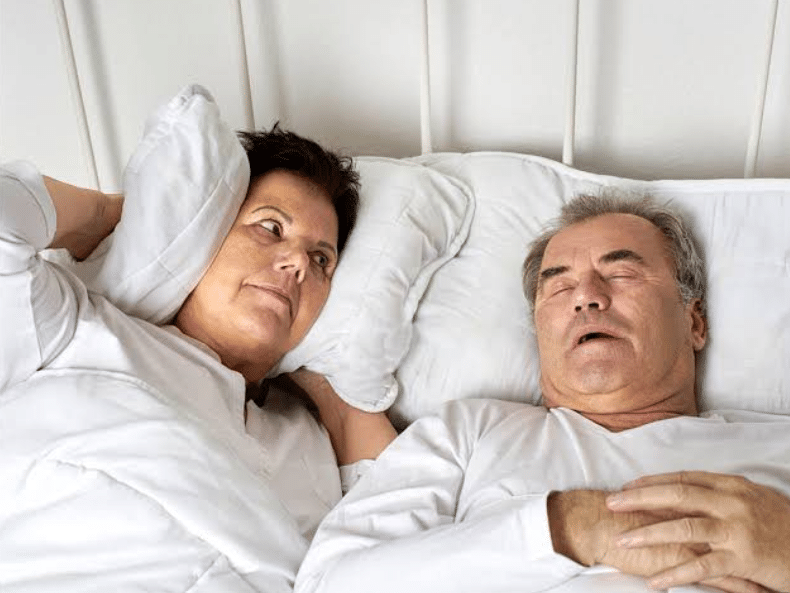
Snoring becomes a clinical concern when accompanied by secondary signs of sleep fragmentation. The most alarming symptom is witnessed pauses in breathing, where a bed partner observes silence followed by an abrupt, violent gasp, choke, or snort as the brain fights to reopen the throat. Other hallmark indicators include waking up with a parched, dry mouth or sore throat from mouth breathing, persistent morning tension headaches caused by overnight carbon dioxide retention, and waking up unrefreshed despite spending eight hours in bed. Daytime manifestations include brain fog, memory lapses, irritability, and uncontrollable drowsiness during quiet activities such as reading or driving. If your snoring occurs alongside any of these red flags, a comprehensive airway evaluation is strongly warranted.
- The Hidden Cardiovascular and Systemic Toll of Untreated Airway Collapse
When an obstructed airway chokes off oxygen supply during sleep, the brain activates an emergency sympathetic fight-or-flight response. The adrenal glands release a surge of adrenaline and cortisol, blood vessels constrict, and heart rate and arterial blood pressure spike dramatically to pull the body out of deep sleep and restore breathing. When this cycle repeats dozens or hundreds of times every night, the vascular system endures chronic, unrelenting physical strain. Clinical research links untreated sleep-disordered breathing directly to an increased risk of treatment-resistant hypertension, coronary artery disease, heart attack, cardiac arrhythmias such as atrial fibrillation, and stroke. Re-establishing open, stable breathing stops these nightly autonomic shocks, protecting long-term heart and brain health.
- Subtle Oral Signs Dentists Notice During Routine Examinations
Dentists are uniquely positioned to spot the earliest physical indicators of sleep-disordered breathing because they examine the oral and pharyngeal anatomy multiple times a year. During a routine checkup, a trained dental clinician looks beyond cavities and gum health. They evaluate the Mallampati score (how much the tongue obstructs the visibility of the throat), check for an enlarged or scalloped tongue created by pressing against the teeth in a nighttime struggle to breathe, and look for an elongated, swollen uvula. Furthermore, dentists frequently identify nocturnal bruxism—severe tooth grinding, chipped enamel, and fractured fillings—which is often the body’s unconscious attempt to thrust the lower jaw forward to clear an obstructed airway. Identifying these structural signs allows dentists to connect oral symptoms with nighttime snoring.
- The Collaborative Diagnostic Path: Sleep Studies and Medical Evaluation
A fundamental standard of dental sleep medicine is that dentists do not diagnose sleep apnea independently; they work in close partnership with physicians and certified sleep specialists. If a dental screening reveals airway risks or habitual loud snoring with daytime fatigue, the next step is an objective medical sleep evaluation. Patients typically undergo either an in-lab polysomnography (PSG) or a convenient Home Sleep Apnea Test (HSAT) conducted in their own bed. The study monitors breathing channels, heart rate, and oxygen saturation to calculate your Apnea-Hypopnea Index (AHI). A physician reviews the data to deliver an official diagnosis, determining whether your snoring represents benign vibration, mild-to-moderate OSA, or severe sleep apnea.
- How Custom Oral Appliance Therapy (OAT) Keeps the Airway Open
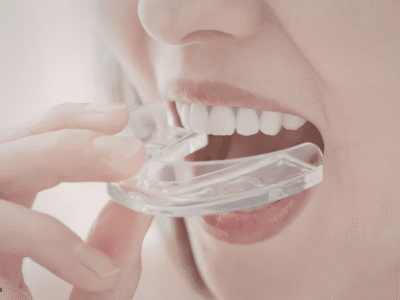
For patients diagnosed with primary snoring, mild-to-moderate Obstructive Sleep Apnea, or those who cannot tolerate a CPAP machine, dental Oral Appliance Therapy provides a non-invasive, comfortable medical treatment. The most common devices are Mandibular Advancement Devices (MADs). Fabricated as two slim, custom-fitted clear trays that snap securely over the upper and lower teeth, the appliance gently guides the lower jaw (mandible) slightly forward and downward. Because the base of the tongue is physically anchored to the inside of the lower jaw, advancing the mandible pulls the tongue base forward, away from the back of the throat. This mechanical shift widens the retroglossal airway space, tensions the lateral throat walls, and stabilizes the soft palate, eliminating soft-tissue vibrations and preventing airway collapse.
- Why Custom Dental Devices Outperform Over-the-Counter Snore Guards
Faced with loud snoring, many individuals try inexpensive over-the-counter “boil-and-bite” mouthguards sold online or at pharmacies. While these generic devices claim to reduce snoring, they carry significant dental risks. Mass-produced guards fit loosely, creating uneven torque across individual teeth that can permanently alter your bite, loosen dental work, and trigger severe temporomandibular joint (TMJ) pain. Crucially, an unregulated guard may muffle the sound of snoring while failing to resolve underlying apneas, leaving you vulnerable to oxygen desaturation. Custom oral appliances are precision-milled from high-resolution 3D digital impressions, calibrated specifically to your jaw joint tolerances, and monitored under dental supervision to ensure your teeth and bite remain healthy and stable.
- High Compliance and Lifestyle Freedom Compared to CPAP
While Continuous Positive Airway Pressure (CPAP) remains a recognized treatment for severe sleep apnea, its clinical effectiveness is heavily limited by poor patient adherence. Between 30% and 50% of CPAP users abandon their machines due to claustrophobia, noisy pumps, dry nasal passages, or leaky masks. Oral appliances offer an appealing, travel-friendly alternative with documented compliance rates exceeding 85% to 90%. Custom oral appliances are completely silent, require no electricity, cords, or distilled water, fit into a small pocket case, and allow you to sleep comfortably in any position, including on your side or stomach. Because oral appliances are easy and comfortable to wear, patients consistently keep them in place all night long, securing steady therapeutic benefits.
- Reclaiming Restful Sleep, Mental Clarity, and Relationship Harmony
The ripple effects of treating chronic snoring and airway obstruction extend to every aspect of daily life. When your brain receives continuous, oxygen-rich sleep, sleep architecture stabilizes, allowing you to cycle through essential deep and REM stages. Patients report that morning brain fog lifts, focus and short-term memory sharpen, emotional resilience improves, and afternoon exhaustion fades away. Equally important is the transformation that occurs in personal relationships. Chronic loud snoring frequently leads to “sleep divorce,” forcing partners into separate bedrooms and straining marital intimacy. Silencing the snore and stabilizing the airway restores quiet nights, allowing couples to share the same bed in comfort and wake up genuinely rested.
Conclusion
Snoring should never be dismissed as just an annoying nighttime sound or an inevitable consequence of getting older. While not every snore signals a dangerous medical emergency, it is always an acoustic reminder that air is meeting resistance on its way to your lungs. In many cases, persistent snoring is the very first warning sign that the upper airway is struggling to stay open during sleep.
Ignoring chronic snoring leaves your cardiovascular system, daytime energy, and personal relationships vulnerable to long-term strain. Fortunately, you do not have to struggle through noisy nights or battle exhausting days. Through collaborative dental sleep medicine, advanced digital screening, and comfortable, custom-milled oral appliances, you can keep your airway clear, protect your health, and enjoy quiet, refreshing sleep every night.
Explore Better Sleep at Molson Park Dental
Are you or your partner tired of noisy, interrupted nights? The caring and experienced team at Molson Park Dental in Barrie is here to help you connect the dots between your dental health, your airway, and your sleep quality. Contact our clinic today to schedule a comprehensive airway and oral appliance consultation.
Contact Information
- Call: (705) 722-4848
- Address: 33 Mapleview Drive W, Barrie, Ontario
- Email: [email protected]
- Website: https://molsonparkdental.com/
Frequently Asked Questions (FAQ)
Q1. Does snoring always mean I have Obstructive Sleep Apnea?
A1. No. Many individuals experience primary snoring, which means the soft tissues of the throat vibrate without causing breathing stoppages or significant drops in blood oxygen levels. However, because loud and habitual snoring is the primary symptom of Obstructive Sleep Apnea, it is always wise to undergo an airway evaluation and medical sleep study to rule out underlying apnea events.
Q2. How does a dentist help treat a condition related to sleep and snoring?
A2. Dentists possess specialized training in the anatomy of the mouth, jaw joints, and upper airway. By identifying physical risk factors like a narrow palate, worn teeth from nocturnal clenching, or an enlarged tongue, your dentist can screen for airway compromise. If sleep-disordered breathing is diagnosed by a physician, your dentist can design, fit, and calibrate a custom mandibular advancement device that holds your lower jaw forward to keep your airway open while you sleep.
Q3. Are over-the-counter anti-snoring mouthguards just as good as a custom dental appliance?
A3. No. Drugstore or online boil-and-bite mouthguards are generic, bulky, and lack the precision necessary to protect your bite. Because they apply uncontrolled pressure across your teeth, they can cause tooth shifting, gum irritation, and painful jaw joint (TMJ) disorders. Furthermore, they may silence the sound of snoring while failing to fix dangerous oxygen drops. A custom appliance is digitally designed from your personal scans and calibrated by a dentist to protect your teeth while keeping your airway open safely.
Q4. Will my private insurance plan cover a custom oral appliance for snoring and sleep apnea?
A4. If an oral appliance is prescribed to treat diagnosed Obstructive Sleep Apnea, it is generally classified as durable medical equipment rather than a cosmetic dental treatment. Most Canadian extended health benefit plans provide partial to full coverage under medical provisions when accompanied by a physician’s prescription and a formal diagnostic sleep study. Our team at Molson Park Dental can assist you with pre-determinations to review your coverage.
Q5. How long does it take to get used to wearing an oral appliance at night?
A5. Most patients adjust to wearing their custom oral appliance within one to two weeks. During the initial days, you may notice slight excess salivation or mild morning jaw tightness as your facial muscles adapt to the forward resting posture. These sensations are temporary and typically fade within fifteen to thirty minutes after using your morning repositioning exercises.