Premise
Obstructive Sleep Apnea (OSA) is widely regarded as a pulmonary and sleep-medicine concern, yet its physical origin lies primarily in oral, cranial, and pharyngeal biomechanics. When muscle tone relaxes during deeper sleep stages, the tongue, soft palate, and surrounding upper airway tissues collapse into the pharynx, choking off airflow and causing frequent blood oxygen desaturations. While Continuous Positive Airway Pressure (CPAP) therapy remains the historical gold standard, high patient intolerance rates leave thousands of individuals untreated and vulnerable to severe systemic complications. Dental Sleep Medicine bridges this therapeutic gap. By using precision-milled custom oral appliances, qualified dental professionals can physically stabilise the lower jaw and tongue base, keeping the upper respiratory tract open naturally. For Barrie patients with mild-to-moderate OSA or those who cannot tolerate a CPAP mask, dental oral appliance therapy provides a quiet, comfortable, and clinically validated treatment that restores restorative sleep and long-term vitality.
Introduction
Quality sleep is not an optional indulgence; it is a physiological necessity that regulates cognitive performance, cardiovascular stability, metabolic balance, and cellular repair. Yet for hundreds of thousands of Canadians—including many residents living right here in Barrie and throughout Simcoe County—every night brings an exhausting cycle of airway obstruction, noisy snoring, and gasping for air. Obstructive Sleep Apnea is a chronic disorder in which the soft tissues at the back of the throat collapse repeatedly, blocking the airway dozens or even hundreds of times each night.
The immediate result is severe sleep fragmentation. You may spend eight hours in bed and still wake up feeling as though you barely slept an hour, battling morning headaches, mental fog, and debilitating daytime exhaustion. Over time, untreated sleep apnea places immense stress on the heart and vascular system, driving up the risk of chronic high blood pressure, atrial fibrillation, type 2 diabetes, stroke, and motor vehicle accidents caused by drowsy driving.
Although CPAP machines are frequently prescribed, up to half of all patients abandon them due to noisy motors, claustrophobic face masks, nasal congestion, or cumbersome hoses. Fortunately, modern dental sleep medicine offers an effective, non-invasive alternative: Oral Appliance Therapy (OAT). Designed, fabricated, and calibrated by experienced dentists, these custom-milled oral appliances position the lower jaw and tongue forward to prevent airway collapse without cords, masks, or forced air. Below are ten foundational aspects of sleep apnea treatment and dental appliances that Barrie patients need to know to take control of their nightly rest.
10 Essential Points: Dental Sleep Medicine and Oral Appliance Therapy
- Understanding Obstructive Sleep Apnea vs. Primary Snoring
While loud, chronic snoring is the most recognized warning sign of sleep-disordered breathing, it is vital to distinguish between benign primary snoring and true Obstructive Sleep Apnea. Primary snoring occurs when air squeezes past relaxed tissues in the soft palate and uvula, creating acoustic vibration without significantly obstructing oxygen exchange or interrupting deep sleep. In contrast, Obstructive Sleep Apnea involves partial (hypopneas) or complete (apneas) anatomical collapses of the upper pharynx lasting ten seconds or longer. During an apnea event, oxygen saturation in the blood drops sharply, triggering a fight-or-flight release of adrenaline and cortisol from the brain to jolt the body awake just enough to reopen the airway. These micro-arousals shatter normal sleep cycles, preventing you from reaching restorative slow-wave and REM sleep. Custom dental appliances treat both conditions simultaneously by addressing their common mechanical cause: a narrowed retroglossal airway space.
- The Biomechanical Mechanism of Mandibular Advancement Devices (MADs)
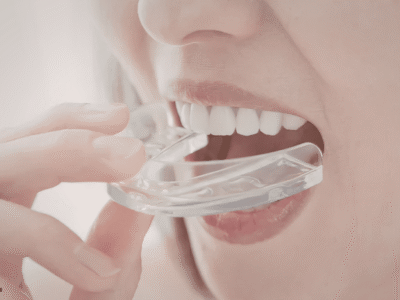
The premier dental appliances used for sleep apnea treatment belong to the class of Mandibular Advancement Devices (MADs). Engineered as custom, two-piece clear trays fitted precisely over the upper and lower dental arches, a MAD utilizes a precision titration mechanism that gently brings the mandible (lower jaw) forward relative to the maxilla. Because the base of the tongue attaches directly to the inner surface of the lower jaw via the genioglossus muscle, advancing the mandible pulls the tongue base forward and away from the back wall of the throat. At the same time, this forward movement tensions the lateral pharyngeal walls and stabilizes the soft palate, preventing the throat tissues from collapsing inward during negative-pressure inhalation. This mechanical clearance allows patients to breathe easily and silently through their nose and throat all night long.
- Oral Signs That Tip Off Barrie Dentists Before a Medical Diagnosis
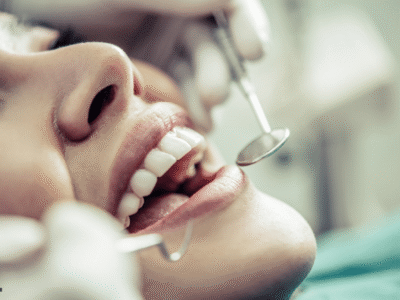
Because patients see their dental team for routine checkups and hygiene cleanings more frequently than their family physicians, dentists often serve as the front line in identifying undiagnosed sleep-disordered breathing. During a comprehensive oral examination, a trained dentist observes subtle clinical indicators of airway compromise. These include severe nocturnal bruxism (flattened enamel and chipped cusps caused by the subconscious jaw clenching forward to clear a blocked airway), abfraction lesions near the gumline, scalloped tongue edges created by pressing the tongue against teeth in a struggle for air, an elongated uvula, enlarged tonsils, a high vaulted palate, and a crowded or narrow Mallampati Class III or IV airway score. Recognizing these oral cues enables your dentist to initiate airway evaluations before severe cardiovascular issues develop.
- The Crucial Role of Collaborative Medical Diagnostics and Sleep Studies
A fundamental tenet of ethical dental sleep medicine is that dentists do not diagnose obstructive sleep apnea in isolation; they treat it in close collaboration with medical physicians and sleep specialists. To receive an oral appliance, Barrie patients must undergo a diagnostic sleep study—either an overnight in-lab polysomnography (PSG) or a comfortable Home Sleep Apnea Test (HSAT) conducted in their own bed. The study calculates your Apnea-Hypopnea Index (AHI), which measures how many times your breathing pauses per hour: mild (5–14 events), moderate (15–29 events), or severe (30+ events). Clinical guidelines from the American Academy of Sleep Medicine and the American Academy of Dental Sleep Medicine validate oral appliance therapy as a primary, first-line treatment for mild-to-moderate OSA, as well as an effective alternative for severe cases when CPAP is refused or abandoned.
- Comparing Custom Oral Appliances to CPAP Therapy
Continuous Positive Airway Pressure works by blowing room air through a sealed nasal or full-face mask, creating a pneumatic splint that forces the airway open. While CPAP therapy is effective in a laboratory setting, its real-world success is limited by poor compliance. Studies show that roughly 30% to 50% of CPAP patients stop using their devices within the first year due to dry nasal passages, eye irritation from air leaks, facial breakouts, acoustic noise from the pump, or feelings of claustrophobia. Oral appliances solve these compliance barriers. They operate completely silently, require no electrical outlets, cords, or distilled water, create no claustrophobic facial contact, and allow you to sleep comfortably in any position—including on your side or stomach. As a result, patient adherence rates for oral appliances routinely exceed 85% to 90%, delivering superior real-world health outcomes because patients actually wear them through the entire night.
- The Dangers of Over-the-Counter “Boil-and-Bite” Snore Mouthguards
Facing sleepless nights, many individuals try inexpensive over-the-counter anti-snoring mouthguards purchased online or from drugstores. These generic, boil-and-bite devices carry significant clinical risks when used for sleep apnea. Made from bulky, spongy plastics, OTC guards lack precise bite registration and exert uncontrolled, uneven leverage across your teeth. Over several months, they can cause bite changes, loosen teeth, and trigger severe pain in the temporomandibular joints (TMJ). Most concerning of all, an unregulated OTC guard may silence the audible sound of snoring while failing to resolve deeper oxygen desaturations, giving patients a false sense of security while their cardiovascular risks continue unchecked. Custom clinical appliances are digitally designed from 3D intraoral scans, fabricated from rigid biocompatible polymers, and calibrated under strict dental supervision to safeguard your bite and jaw joints.
- The Step-by-Step Custom Fitting and Digital Titration Process
Fabricating a clinical-grade oral appliance involves a precise, step-by-step workflow designed around your unique anatomy. The process begins with a comprehensive TMJ evaluation and periodontal screening to verify that your jaw joints and dentition can support an appliance comfortably. High-resolution 3D digital scanners capture impressions of your teeth and soft tissues, while a specialized bite gauge records your mandible in a comfortable forward position. A certified dental sleep laboratory then custom-mills the appliance. At the delivery appointment, your dentist checks the fit, verifies the seal, and confirms comfortable jaw positioning. Over the following weeks, you enter a gradual “titration” phase, making micro-adjustments to the appliance to maximize airway opening while keeping your jaw joints completely comfortable.
- Protecting Your Temporomandibular Joint (TMJ) and Bite Stability
A top priority in professional dental sleep medicine is protecting your occlusion (how your upper and lower teeth meet) and preserving the health of the temporomandibular joints. Because an oral appliance holds the jaw forward for six to eight hours every night, the jaw muscles and retrodiscal tissues adapt to that posture, which can cause temporary morning bite changes. To prevent permanent shifts, dentists provide patients with an individualized “morning repositioner” or morning aligner. Chewing gently on this small indexing device for five to ten minutes each morning guides the lower jaw back into its centric, normal daytime position. With ongoing checkups and regular morning repositioning, oral appliance therapy protects long-term bite stability and prevents chronic TMJ problems.
- Navigating Extended Health Insurance and Benefit Coverage in Ontario
Understanding insurance coverage is an important step in pursuing sleep apnea care. In Ontario, the fabrication of a custom oral appliance for Obstructive Sleep Apnea is classified as a durable medical device rather than an elective dental treatment. While routine provincial health plans (OHIP) do not cover custom dental appliances directly, most private extended health care policies provide substantial coverage under medical benefits, provided you have a physician’s prescription, a formal diagnostic sleep study, and a confirmed diagnosis of OSA. The administrative team at your Barrie dental office works with your insurance provider, submitting detailed pre-determinations, diagnostic sleep study reports, and medical narratives to maximize your out-of-pocket savings.
- Reversing Systemic Health Consequences and Reclaiming Daily Energy
Restoring open, unobstructed breathing during sleep delivers health benefits that extend far beyond quiet nights. Consistently maintaining blood oxygen levels and uninterrupted sleep cycles reduces systemic inflammation throughout the vascular system, helping lower resting arterial blood pressure and easing strain on the heart. Patients experience deeper metabolic stability, reduced daytime hunger hormones (ghrelin), and improved blood sugar control. Cognitively, the transformation is immediate: brain fog clears, short-term memory improves, mood and focus sharpen, and chronic morning headaches disappear. Couples can finally return to sharing the same bedroom in peace, waking up refreshed, alert, and energized to enjoy life across Simcoe County.
Conclusion
Obstructive Sleep Apnea is a serious medical condition with profound consequences for your cardiovascular health, cognitive clarity, and overall quality of life. Yet managing it does not have to mean wrestling with a noisy, uncomfortable mask every night. Modern dental sleep medicine offers a quiet, compact, and scientifically proven solution that works with your natural anatomy.
If you struggle with loud snoring, wake up gasping, or find yourself unable to tolerate your CPAP machine, a custom mandibular advancement device may be the ideal answer. By partnering with an experienced dental team in Barrie, you can access personalized airway screenings, precision 3D scanning, and gentle oral appliances that keep your airway open comfortably—allowing you to wake up energized, refreshed, and truly rested.
Take Control of Your Sleep and Health at Molson Park Dental
Are you ready to leave behind chronic exhaustion, loud snoring, and uncomfortable CPAP masks? The dedicated, caring team at Molson Park Dental in Barrie is here to help you breathe easily throughout the night with custom oral appliance therapy. Contact our clinic today to book your comprehensive sleep apnea and airway consultation.
Contact Information
- Call: (705) 722-4848
- Address: 33 Mapleview Drive W, Barrie, Ontario
- Email: [email protected]
- Website: https://molsonparkdental.com/
Frequently Asked Questions (FAQ)
Q1. Can any dentist in Barrie make a custom sleep apnea appliance?
A1. While any licensed dentist can take dental impressions, treating obstructive sleep apnea requires specialized training in Dental Sleep Medicine, bite management, airway anatomy, and TMJ biomechanics. It is essential to choose a dental practice experienced in screening for airway compromise, reading diagnostic sleep study reports, and properly titrating appliances in coordination with medical sleep physicians.
Q2. How long does a custom mandibular advancement device last?
A2. High-quality, laboratory-milled oral appliances fabricated from durable dental polymers typically last between 3 and 5 years with proper care and maintenance. Using recommended cleaning crystals, keeping the device away from heat, and bringing it to your regular dental checkups for inspection ensures maximum longevity.
Q3. Will wearing a sleep apnea mouthguard permanently change my bite?
A3. Without proper guidance, holding the lower jaw forward overnight could lead to subtle tooth shifts. However, your dentist prevents this by providing a custom “morning repositioner” aligner. Exercising your jaw muscles with this small guide for 5 to 10 minutes every morning returns your bite to its normal daytime position, safeguarding your alignment over years of use.
Q4. Does OHIP pay for custom dental sleep appliances?
A4. The Ontario Health Insurance Plan (OHIP) covers the cost of medical consultations with sleep doctors and diagnostic sleep studies (both in-lab and home tests), but it does not cover the fabrication of custom dental sleep appliances. However, most private workplace and individual extended health benefit plans provide substantial reimbursement under medical device provisions when accompanied by a physician’s prescription.
Q5. What is the difference between an oral appliance and a nightguard for teeth grinding?
A5. A standard nightguard is designed strictly to protect tooth surfaces from the wear and tear of clenching or grinding (bruxism); it fits over one arch and does not position the jaw forward. An oral appliance for sleep apnea is an advanced, two-piece orthotic device that actively advances the lower jaw to keep the airway clear. Wearing a standard nightguard will not prevent sleep apnea airway collapses and can sometimes worsen breathing obstructions if not evaluated by an airway-focused dentist.